- Continue grazing stockpiled Fescue by allocating 1-3 days of supply at a time.
- Limit overgrazing by providing hay
- If it turns wet, limit grazing to prevent pugging (hoof damage to sod)
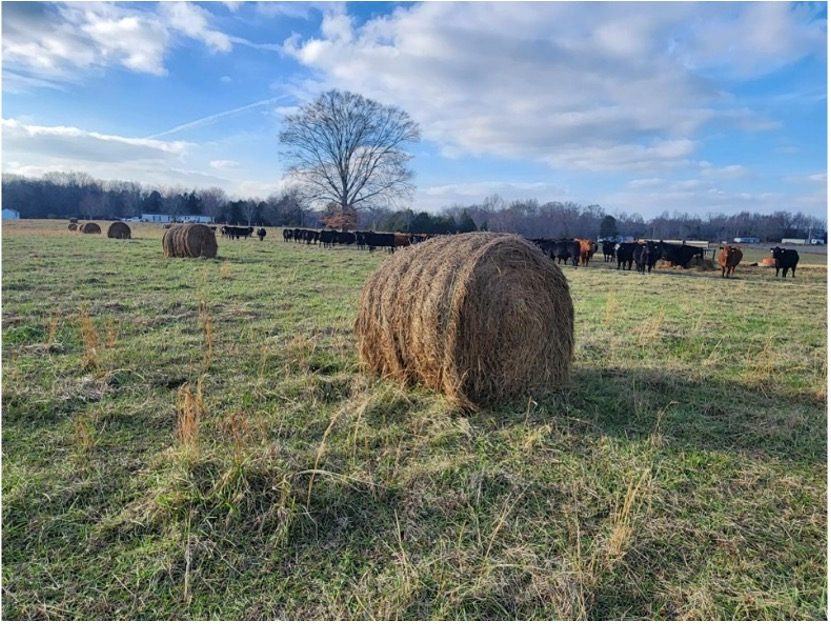
- It's not too late to try bale grazing.
- Identify areas that bale grazing can help increase organic matter and soil health (where there is bare ground, broomstraw or weeds?)
- Set out bales of hay when it's not muddy
- Fence the bales out with temporary electric fencing
- Allow access to a few bales at a time (as needed, similar to strip grazing)
- Benefits include:
- using the tractor once to feed multiple days
- increase soil fertility
- actually reduces labor and time
- Order your clover for frost seeding in late February or early March
- Ensure your livestock have enough energy to stay warm when temperatures drop
- Increase forage intake to help animals generate heat
- If your hay test shows that your hay is lacking in Total Digestible Nutrients (TDN), and/or your animals have higher energy needs from late pregnancy, early lactation, extreme cold, supplement with additional energy from corn gluten feed, soybean hulls, etc.
- Ensure access to clean, unfrozen water (break ice at least twice a day)
- Provide windbreaks with a shed, a dense hedgerow, trees, or even round bales
- Ensure any bedding (straw, shavings, etc.) is dry and deep
- Pay special attention to newborns, older/aged animals, chronically thin animals
- See more cold weather tips here
December Livestock Mangement Tips
Join our mailing list!
Enter your email address to receive updates.
Written By