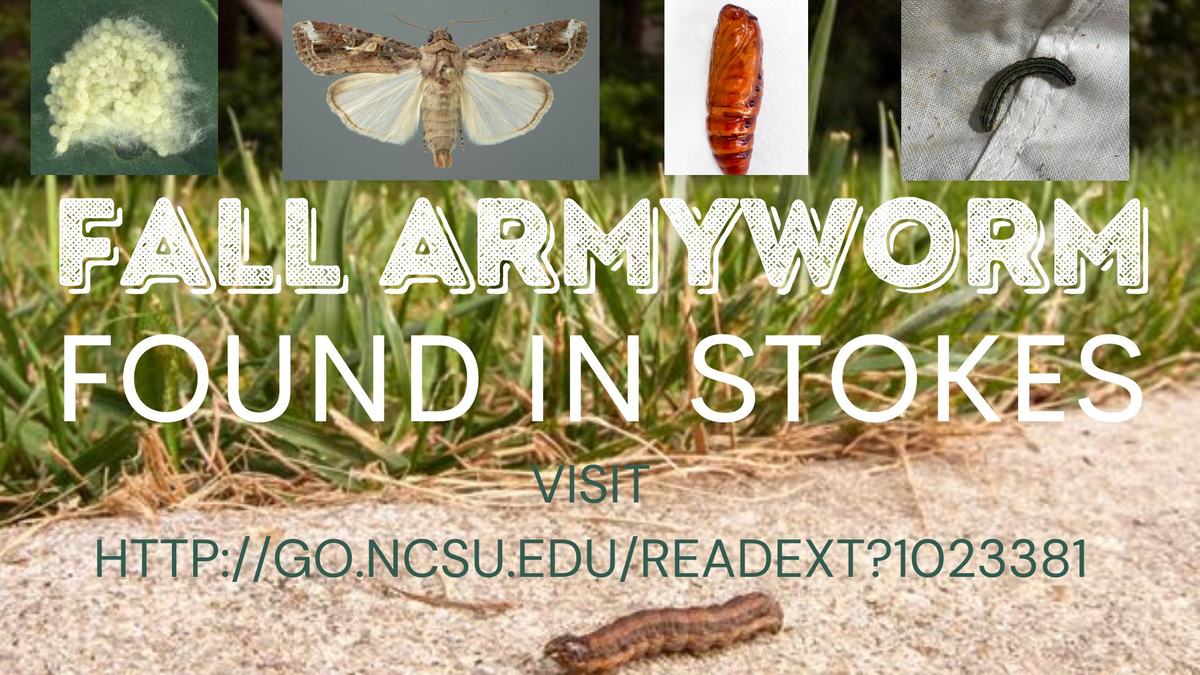
The Fall Armyworm has been reported in Stokes County. They can wreak havoc in pastures, hayfields, and lawns overnight. While these brown caterpillars eat most vegetation, they have a penchant for grasses. Due to favorable summer conditions, this lawn munching pest has hit record numbers.
Unfortunately, the window for early control has passed entirely. Due to the significant rainfall in July, they were able to spread mostly undetected. Most of their damage occurs only at the end of their larval stage. Fortunately, by the time most individuals notice them they are almost done feeding and will soon disappear.
The adult moths are able to cover significant distances and arrive from further south. Typically they do not appear in numbers large enough to be problematic.
We can start to see economic impacts pastures and hayfields from these armyworms. The best method of prevention of a fall armyworm infestation is regular scouting. You’ll need to look closely at the ground and ruffle the grass a bit to see the worms. Look for small, striped larvae that can range from light green to black, with a distinct “inverted Y” on their faces. To determine if you’re nearing the threshold for treatment, count the worms within a square foot area. Do this in multiple sites in the field. On average, if there are 3 worms per square foot or more, you need to look at treatment and control options.
There are a few different treatment options. If armyworms are in a hay field, you can harvest the hay before the armyworms take it all out. If you do this, make sure that you have good weather for haymaking, and do it as quickly as possible. If you have reached the threshold and wait a few days, the worms WILL take out your field before you can harvest. If you cannot harvest it, or you have armyworms in your pasture, spraying an insecticide may be necessary. You can find a list of insecticides for pastures and hayfields here. Pay attention to label warnings, and make sure you pay special attention to grazing restrictions on what you spray.
If you have a field that has already been defoliated, spraying is not going to be beneficial. Pastures will need to be reseeded or fertilized at the least in the fall to encourage new growth.*
View the Interactive Armyworm map here.
Learn about armyworms in: