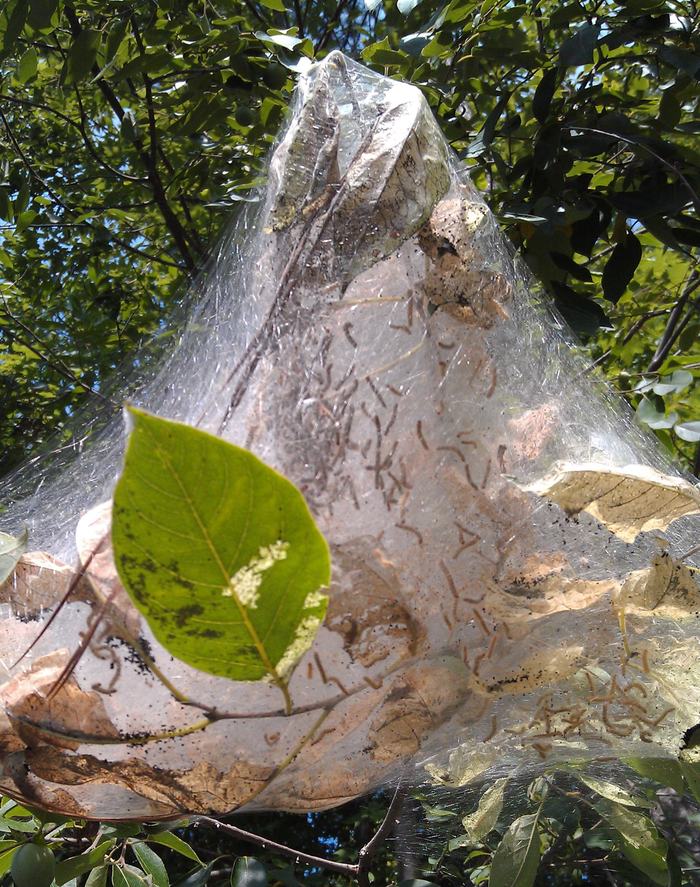
You may have seen them already, fall webworms in many different types of trees. Fall webworms, a native insect, are actually caterpillars, and mature as moths in the adult stage. This lifecycle is known as complete metamorphosis, having a distinct egg, larvae (caterpillar), pupae, and adult stage. Most chewing insects (with the exception of grasshoppers) have complete metamorphosis. Another type of insect lifecycle called incomplete metamorphosis only has three stages, the egg, larvae or immature stage, and the adult stage. Most piercing/sucking insects, like aphids, scale, or whitefly have incomplete metamorphosis.
After the fall webworms eggs hatch, they begin building their web-like nest in trees as they mature, typically from July through September. And although they defoliate the area the webbing is in, and feed on other leaves on the tree, they generally don’t harm the tree. Even though the webbing can be unsightly, control measures are generally not recommended or warranted since they will be gone once the leaves drop in the fall. Also, chemical sprays may not make it through the webbing, and can also harm other beneficial insects feeding on the fall webworms. Pruning out the webbing isn’t recommended as it may cause your tree to become unsightly. Non-chemical control methods may include punching holes in the webbing with a long pole or stick to allow birds and other beneficials access to feed on them.
For more information about fall webworms or any other horticulture topic, feel free to contact Matt Lenhardt at 336-593-8179 or at matt_lenhardt@ncsu.edu.