Feeding Late Gestation Cows

(Updated: July 28, 2021, 11:12 a.m.)
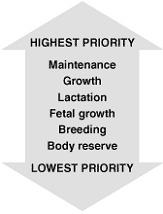
nutrient priority graphic
Nutrient Priorities infovets.com

Fall calving season is right around the corner! As bred cows and heifers enter their last trimester, their nutrient needs greatly increase. Fetal growth decreases rumen capacity, leading to decreased feed intake. This combination of circumstances means that high energy feedstuffs are necessary.

When developing a feeding plan for late gestation animals, it's important to remember the order in which nutrients are used. Fetal growth falls below both maintenance and growth, meaning that energy needs will be higher for bred heifers than cows.

Bearing all of this in mind, the TDN (energy) requirement of a bred heifer expected to mature at 1,300 pounds is nearly 14 pounds a day, or 65% of their expected dry matter intake (DMI). A 1,300 pound mature cow can require up to 24 pounds of TDN a day, or 58% of their expected DMI. Due to the high moisture content (80%), it is nearly impossible for an animal to consume enough fresh forage to meet their energy needs during this time. For these reasons, supplementation during late gestation is almost always necessary.
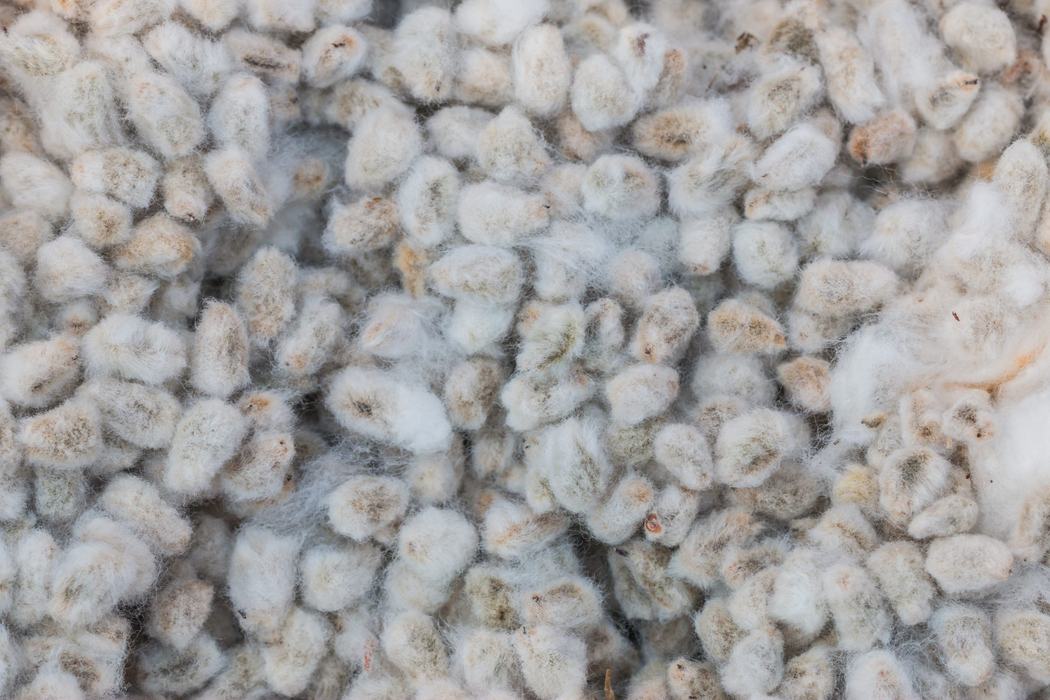

whole cottonseed
Whole Cottonseed

There are many options available for supplements, but there is no one size fits all solution. Considerations when choosing an energy supplement include transportation, storage, handling, and most importantly, cost. Popular energy supplement feedstuffs include concentrates such as corn (~85% TDN), or a commercial pellet that has a TDN content above 65%. When choosing to use a commercial pellet, be sure that is is specifically formulated as an energy supplement, rather than for crude protein. Concentrates can sometimes decrease forage intake due to changes in ruminal function when fed at high levels. More economical options are by-product feeds, such as soybean hulls (77% TDN) or whole cottonseed (90% TDN). These are fibrous options, and do not affect forage intake; although whole cottonseed should be fed in moderation due to their high oil content.

Need help choosing a supplement, or creating a feeding plan? Contact Kendra Phipps at kpphipps@ncsu.edu or 336-593-8179.