Many times, we tend to forget to keep it simple. With all the new technology and information in animal agriculture, it is easy to get overwhelmed and forget that the basic tools, such as body condition scoring, are still as important and useful as ever.
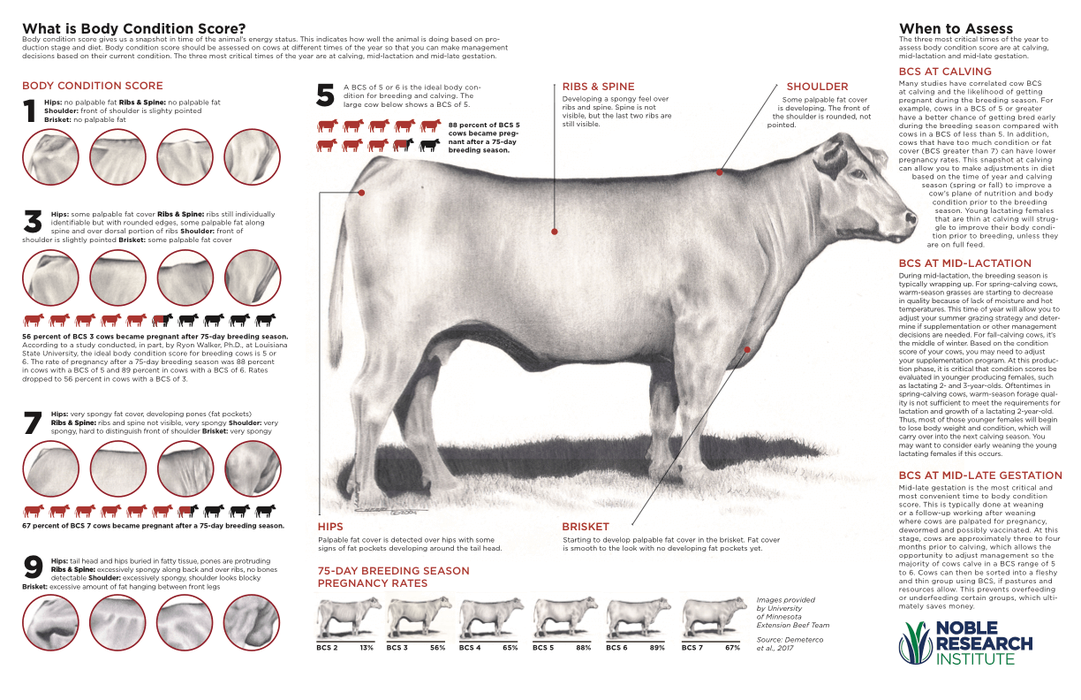
What: Body condition scoring (BCS) allows for a quick assessment of if an animal's nutritional needs are being met. BCS is a particularly useful tool in beef cattle herds, allowing for determination of if cows are in an adequate body condition for breeding and calving. The BCS scale is from 1 (far too thin) to 9 (obese).
Why and when: It is expected that an animal will be at a score of 5-7 at calving and a 5-6 at breeding. Assessing BCS 60-90 days prior to calving and breeding will allow for time correct any problems with the feeding plan, such as cutting back if cows are overweight or "emergency feeding" if too thin. Animals that are too thin (scores 1-4) may not cycle and remain open. This results in less calves, therefore less revenue. Alternatively, cows that are overweight (scores 7-9) pose the risk of dystocia at calving, and may also not cycle.
How: Body condition scoring involves looking at several areas of an animal's body to determine the amount of flesh or fat on the animal. The infographic below, sourced from The Noble Research Institute, further explains this.